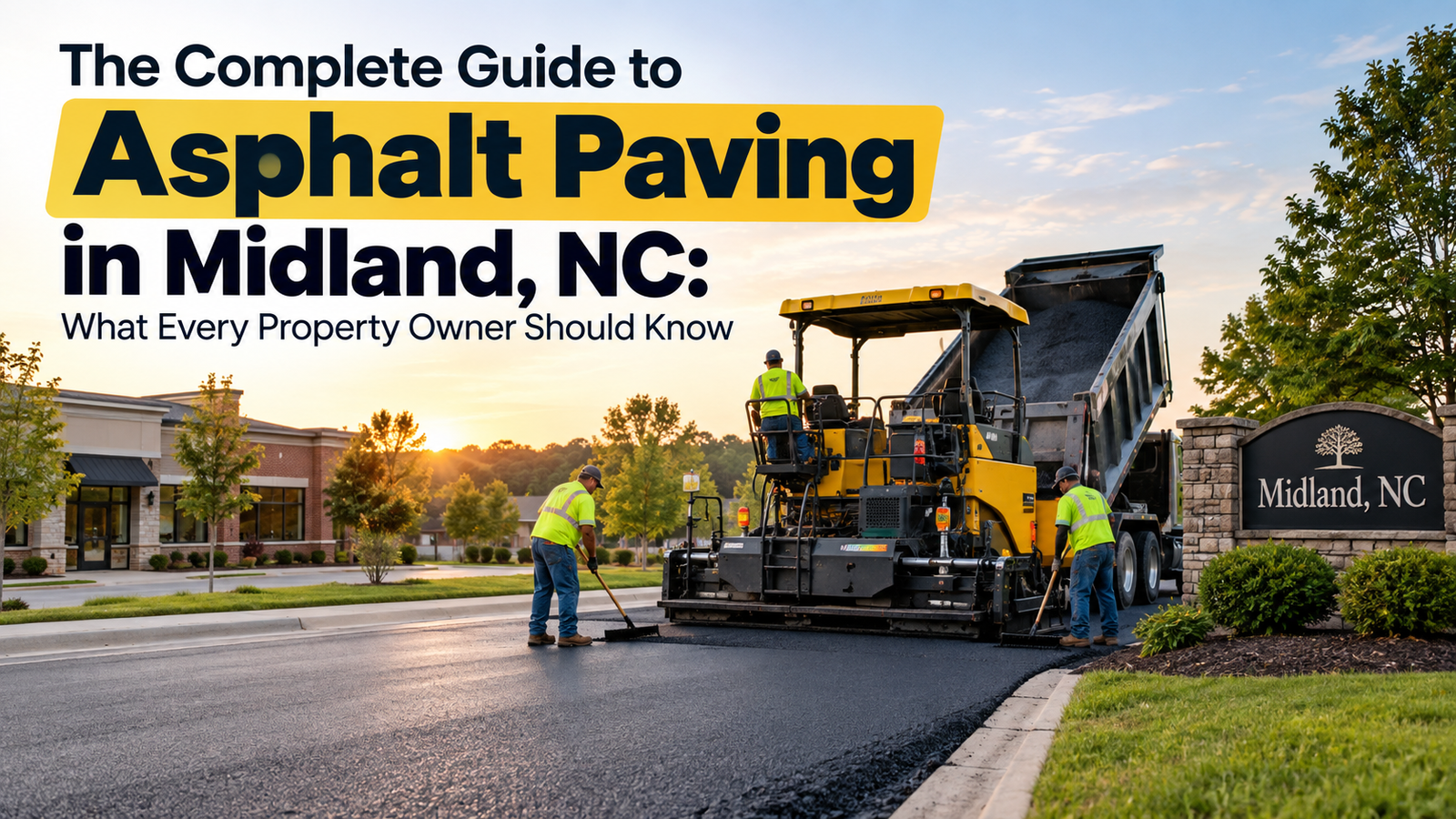
Midland sits in the southern half of Cabarrus County, a stretch of the Piedmont that has grown quickly as Charlotte’s suburbs push outward. Where farmland once dominated the landscape, new subdivisions, commercial pads, and expanded roadways have taken over, and with that growth comes a steady need for durable, well-installed asphalt. Whether it is a driveway leading up to a new build near Reedy Creek Road or a parking area serving a small business off NC-24/27, understanding how Asphalt Contractor Midland paving actually works helps property owners make sense of what they are looking at, what questions to ask, and what a properly finished surface should look like.
This guide walks through the fundamentals of asphalt paving in a Piedmont climate like Midland’s, from the materials involved to the way seasonal weather affects the lifespan of a surface.
What Asphalt Actually Is
Asphalt pavement is a composite material made of aggregate (crushed stone, sand, and gravel) bound together with asphalt cement, a petroleum-derived binder that holds everything in place while still allowing a small amount of flexibility. That flexibility is one of the biggest differences between asphalt and concrete. Asphalt can expand and contract slightly with temperature swings without cracking as readily, which matters in a region like Cabarrus County where summer surface temperatures can exceed 140 degrees Fahrenheit while winter nights occasionally dip below freezing.
There are generally two layers involved in a properly built asphalt surface: the base course and the surface course. The base course is coarser and thicker, designed to distribute weight and resist rutting. The surface course, sometimes called the wearing course, is finer, smoother, and what people actually see and drive on. Some larger commercial projects add a third layer, a binder course, between the two for additional structural support.
Why the Base Matters More Than the Surface
Homeowners often focus on the top layer of asphalt because that is what they can see, but the base underneath is what determines whether a driveway or lot lasts five years or twenty. In Midland’s clay-heavy Piedmont soil, proper base preparation is especially important. Clay soil retains water and can expand and contract with moisture changes far more than sandy or gravelly soil. If the base isn’t graded, compacted, and given adequate depth of aggregate before asphalt goes down, the surface above it is far more likely to develop dips, cracks, or alligatoring within just a few years.
A well-prepared base typically involves:
- Removing topsoil and organic material, which decompose and create voids over time
- Grading the subgrade to promote proper drainage away from the pavement
- Adding a compacted layer of crushed stone aggregate, often four to eight inches depending on expected traffic load
- Testing compaction before any asphalt is laid
Skipping or rushing these steps is one of the most common reasons asphalt surfaces fail prematurely, and it is rarely visible until problems start to show up on the surface.
How Drainage Shapes a Paving Project
Standing water is asphalt’s biggest long-term enemy. When water pools on a surface or seeps into cracks and then freezes, it expands and accelerates deterioration through a process known as freeze-thaw cycling. While Midland’s winters are milder than New England’s, the area still sees enough freeze-thaw days each year for this to matter, especially on north-facing driveways or shaded areas that hold moisture longer.
Good paving design accounts for this by building in a slight slope, usually around 1 to 2 percent, so water sheets off the surface rather than collecting in low spots. Swales, catch basins, or French drains are sometimes incorporated on larger properties or where the natural grade doesn’t allow for enough fall. Anyone evaluating a paved surface, new or existing, can do a simple visual check after a rainstorm: puddles that linger for more than a day or two usually indicate a drainage or grading issue rather than a problem with the asphalt mix itself.
The Asphalt Installation Process, Step by Step
Understanding the general sequence of a paving project makes it easier to know what to expect and to spot when something looks off.
- Site evaluation and grading. The existing surface, whether it’s bare soil, gravel, or old pavement, is assessed and graded to the correct slope.
- Excavation. Old material is removed to the depth needed for the new base and asphalt layers.
- Base installation and compaction. Aggregate is spread in lifts and compacted with rollers or plate compactors to create a stable foundation.
- Binder course (if applicable). On thicker or higher-traffic installations, a coarser layer of asphalt goes down first.
- Surface course application. The finished asphalt is laid at the correct temperature, typically between 275 and 300 degrees Fahrenheit at the point of placement, and compacted with rollers while still hot.
- Joint and edge work. Seams between old and new pavement, or between paving passes, are compacted carefully since these areas are common weak points.
- Curing. Fresh asphalt continues to harden for several weeks to months after installation, even though it can typically bear light traffic within a day or two.
Temperature during installation matters a great deal. Asphalt that is laid too cold won’t compact properly, leading to a porous, weaker surface that deteriorates faster. This is why most paving work in the Piedmont region happens between late spring and early fall, when ambient temperatures support proper compaction.
Common Terms Property Owners Hear During a Paving Project
A few terms come up often enough that it helps to know what they mean:
Milling refers to grinding up an existing asphalt surface, either to prepare it for a new overlay or to remove damaged material entirely. Milled asphalt is often recycled and reused in new base material.
Overlay is a new layer of asphalt placed directly over an existing, structurally sound surface. This is typically less invasive and faster than full removal and replacement, but it only works if the base underneath is still in good condition.
Alligatoring describes a pattern of interconnected cracks resembling reptile skin, usually a sign of base failure or age-related fatigue rather than a surface-level problem.
Sealcoating is a protective layer applied over cured asphalt to slow oxidation and water penetration. It is a maintenance step, not a repair, and doesn’t fix structural issues.
Crack sealing involves filling individual cracks with a flexible sealant to keep water out before those cracks widen or spread.
Seasonal Considerations for the Piedmont Climate
Midland’s climate includes hot, humid summers and generally mild winters with occasional cold snaps and ice events. This pattern creates a few specific considerations for anyone thinking about the long-term condition of a paved surface.
Summer heat softens asphalt slightly, which is part of why sharp turns from heavy vehicles, like trash trucks or box trucks in a commercial lot, can leave depressions if the base isn’t adequately compacted. Direct sun exposure over years also causes oxidation, which is what gives older asphalt its faded gray color as the binder loses flexibility.
Winter freeze-thaw cycles, while less frequent here than in northern states, still stress any existing cracks. Water that gets into even hairline cracks during a cold snap can widen them measurably by spring, which is why addressing small cracks before winter tends to prevent bigger repairs later.
Heavy spring and summer rain events, common in the Piedmont, also test drainage design. A newly paved surface that handles a light rain fine might reveal a low spot during a heavier storm, which is a normal part of why grading and drainage deserve as much attention as the asphalt mix itself.
How Long Does Asphalt Typically Last?
With proper installation and reasonable maintenance, a residential asphalt driveway in this climate generally lasts 15 to 20 years, while commercial lots subjected to heavier and more frequent traffic often see a somewhat shorter lifespan before major rehabilitation is needed. Several factors influence where a particular surface falls in that range: base preparation, drainage, traffic weight and frequency, sun exposure, and how quickly small cracks are addressed before they expand.
Recognizing Signs of Wear
A few visual cues tend to show up in a fairly predictable order as asphalt ages:
- Fading from dark black to gray, which reflects oxidation of the surface binder
- Fine hairline cracking, often called “crazing,” across the surface
- Wider, more defined cracks running in patterns rather than randomly
- Depressions or shallow dips where water tends to collect
- Alligator cracking, indicating the base beneath has started to fail
- Potholes, which form when water has penetrated deeply enough to wash out or soften the base material
Catching problems in the early stages, particularly hairline cracking, generally allows for far less invasive maintenance than waiting until potholes or alligatoring appear.
The Role of Traffic Load in Pavement Design
Not every paved surface faces the same demands, and traffic load is one of the biggest variables in how a surface should be designed and installed. A residential driveway that primarily handles two passenger vehicles has very different requirements than a commercial lot serving delivery trucks, or a stretch of pavement that occasionally has to support a moving truck or an RV.
Heavier, more frequent traffic generally calls for a thicker base, a more robust binder course, and sometimes a different surface mix designed to resist rutting under sustained weight. This is part of why a driveway and an adjacent commercial parking area, even sitting side by side, can be built to noticeably different specifications despite looking similar once finished. Property owners planning for occasional heavy loads, such as a dumpster delivery during a renovation or a large delivery truck making regular stops, may want to factor that into the design conversation before paving begins, since retrofitting a surface to handle loads it wasn’t designed for is far more difficult than accounting for it upfront.
How New Construction Affects Paving Timing
For newly built homes or commercial developments in Midland’s growing subdivisions, paving is typically one of the final steps in the construction sequence rather than an early one. This timing exists for practical reasons: heavy equipment involved in framing, roofing, and other construction phases can easily damage a driveway or lot if it’s paved too early, and final grading around a structure often isn’t complete until most of the building work has finished.
This means new homeowners sometimes need to be patient, watching other parts of a build come together before the driveway is addressed. It also means that temporary gravel or compacted stone surfaces are common on active construction sites, serving as a placeholder for site access until conditions are right for permanent paving. Understanding this sequence helps set realistic expectations about when a finished driveway will actually be installed relative to the rest of a new build.
Why Regional Aggregate Sources Matter
The aggregate used in both the base layer and the asphalt mix itself typically comes from regional quarries, and the specific mineral composition of that aggregate can have a subtle effect on pavement performance. Aggregate hardness, shape, and gradation (the range of particle sizes within a load of material) all influence how well it compacts and how resistant the finished surface is to wear over time.
In the Piedmont region, locally sourced aggregate is generally well suited to the area’s climate and traffic patterns, and asphalt plants serving Cabarrus County typically work with established regional quarries to maintain consistent mix quality. This regional sourcing also tends to keep material costs more predictable and delivery times shorter, both of which support more reliable project scheduling.
Understanding Pavement Markings and Striping
For commercial and larger residential paving projects, particularly those with defined parking areas, striping and pavement markings serve both a functional and a regulatory purpose. Clear striping helps organize traffic flow and parking, while accessibility markings, such as designated ADA-compliant spaces, are often required by local code for commercial properties.
Striping paint is typically applied after asphalt has cured sufficiently, generally at least a few weeks after installation, to ensure proper adhesion. Reflective or thermoplastic striping materials are sometimes used for higher-traffic commercial areas since they tend to hold up better to repeated vehicle traffic and weathering than standard paint alone.
Frequently Asked Questions
How soon can a new asphalt driveway be driven on?
Most surfaces can handle light vehicle traffic within 24 to 48 hours, though full curing and hardening continues for weeks afterward, so it’s wise to avoid sharp turns or parking a single vehicle in the same spot repeatedly during the first several weeks.
Why does asphalt look different in color right after installation compared to a few months later?
Fresh asphalt is deep black because the binder coating each aggregate particle is still fully saturated. Over the following months, sunlight and air begin the oxidation process, which lightens the surface to the more familiar dark gray tone associated with cured asphalt.
Does clay soil in this area actually affect how a driveway is built?
Yes. The expansive clay common throughout Cabarrus County holds and releases moisture differently than sandy soil, which is why base preparation, including proper compaction and drainage, plays such a significant role in how well a surface performs over time here compared to regions with different soil composition.
Is sealcoating necessary, and how often should it be done?
Sealcoating isn’t structurally required, but it slows oxidation and helps prevent water intrusion, generally extending the useful life of the surface. Many paved surfaces in this climate benefit from a fresh coat every two to three years, depending on sun exposure and traffic.
What’s the difference between an overlay and a full replacement?
An overlay adds new asphalt over an existing, structurally sound surface and works well when the base underneath hasn’t failed. Full replacement removes everything down to the base, which becomes necessary once alligator cracking, widespread potholes, or base failure make an overlay impractical.
Understanding these fundamentals gives property owners in Midland a clearer picture of what goes into a durable, well-built asphalt surface and what to watch for as pavement ages over time. For more information on paving standards and services in the Midland area, visit https://www.victorypavingnc.com/midland.